久久精品视频18-男女交性视频播放-中文日韩-免播放器av-我要看免费毛片-操伊人-国产精品午夜影院-久久精品国产熟女亚洲AV麻豆-日本阿v视频在线观看-日韩一级性生活片-91亚洲精品国偷拍

Position: Home / Our Services /

Our ServicesOur Service

Contact Us

Failure analysis of non-metallic components

The development trend of non-metallic materials technology is high performance, high functionalization, compounding, intelligent and green. Because of the new requirement of technology and the high requirement of products, and customers have different understanding of demanding products and processes, the failure of non-metallic material components such as fracture, cracking, corrosion and discoloration often occurs, which often leads to responsibility disputes between suppliers and users, and consequently leads to serious economic losses. Furthermore, more and more enterprises and units have a new requirement for failure analysis of non-metallic materials. They are no longer the conventional means such as direct replacement, but need to find out the root cause and mechanism of failure by means of failure analysis to improve product quality, process improvement and liability arbitration.


service object

Manufacturers of non-metallic materials:In-depth study of the design, production, process, storage, transportation and other stages of the possible causes of product failure, and its failure mechanism, in order to provide a basis for improving product yield and optimizing production process.

Assembly plant:Responsible arbitration; improve assembly process; provide quality assistance for supplier incoming inspection.

Distributor or agent:To provide favorable evidence for quality responsibility and to define its responsibilities fairly.

Whole machine users:Improve product technology and reliability, and enhance core competitiveness of products. Main failure modes (but not limited to) common failure analysis techniques such as fracture, cracking, corrosion, delamination, foaming, coating peeling, discoloration, wear failure, etc.


Main failure modes (but not limited)

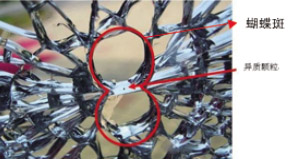
Fracture, cracking, corrosion, stratification, blister, coating off, discoloration, wear failure, etc.


Common failure analysis techniques

Material composition analysis:

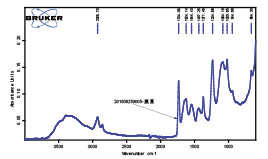
Fu Liye transform infrared spectroscopy (FTIR)

Micro confocal Raman spectrometer (Raman)

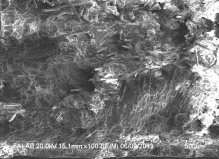
Scanning electron microscopy and energy dispersive spectrometry (SEM/EDS)

X ray fluorescence spectrometry (XRF)

Gas chromatography-mass spectrometry (GC-MS)

Pyrolysis gas chromatography-mass spectrometry (PGC-MS)

Nuclear magnetic resonance analysis (NMR)

Auger electron spectroscopy analysis (AES)

X ray photoelectron spectroscopy (XPS)

X ray diffractometer (XRD)

Time of flight two ion mass spectrometry (TOF-SIMS)

Material thermal analysis:

Differential scanning calorimetry (DSC)

Thermogravimetric analysis (TGA)

Thermomechanical analysis (TMA)

Dynamic thermomechanical analysis (DMA)


Material cracking analysis:

Gel permeation chromatography (GPC)

Melt index test (MFR)


Fracture analysis of materials:

Stereoscopic microscope (OM)

Scanning electron microscope analysis (SEM)

Material physical properties test:Failure / reappearance / verification of tensile strength and bending strength


主站蜘蛛池模板: 醴陵市| 沙田区| 安顺市| 兴业县| 永年县| 连城县| 重庆市| 驻马店市| 牡丹江市| 平遥县| 六枝特区| 肇东市| 元谋县| 绥芬河市| 新龙县| 达日县| 安图县| 铁力市| 通化县| 兰溪市| 呼伦贝尔市| 孝义市| 德昌县| 蒙阴县| 元朗区| 焦作市| 澎湖县| 玉环县| 原阳县| 无为县| 巴塘县| 聊城市| 香格里拉县| 泰和县| 乌鲁木齐市| 梁山县| 屏东市| 沙湾县| 措美县| 阳山县| 古蔺县|